
In-Depth Analysis and Presentation of Results

Infonex is especially proud of the high professional quality, rigor, investigative depth, and graphic presentation of its causal analysis and descriptive research. “Who”, “what”, “when”, “where”, and “how” are questions that all analyses should address. Infonex is also keen to know “why”. To answer these questions, Infonex draws available data and trend analyses prepared internally from key secondary information sources – Population Censuses, Education MIS, World Bank datasets – to provide insight and understanding of change.  We internet search for scholarly and research literature for background, comparative findings and grounded theory.

Reports and Studies:
  • Agency-approved reports of national assessments and major studies of priority topics identified by Infonex Malawi for follow-up, e.g. PEA coaching support
  • Active use of GIS for visual presentation of select results disaggregated by district and zone

Skilled in Quantitative and Qualitative Techniques

Infonex is skilled and accomplished in both qualitative and quantitative study and analysis. We begin with specific, meaningful and attainable research questions and compose testable hypotheses.

  • In qualitative study, we conduct content analysis of focus group and respondent narrative, systematic participant and field observation, nuanced interviews and internally validating surveys as effective data collection methodologies.
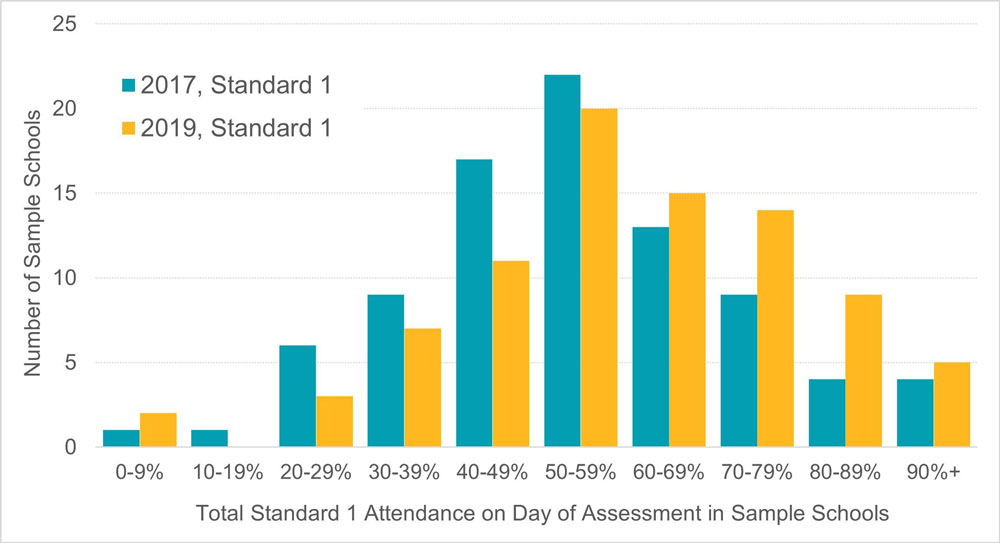
  • We apply quantitative analysis to datasets large and small, disaggregate results by gender and locality where appropriate, apply tabular and statistical analyses, and finish with graphic presentations of results. Infonex gives particular attention to the visual display of quantitative information whenever graphs and charts facilitate the take up and appreciation of time-series results and arrays.

Major Studies Completed

  • The National Assessment of Reading Instruction, Standard 1, 2017 – prepared for RTI International and the USAID Malawi Early Grade Reading Improvement Activity (73p.)
  • The National Assessment of Reading Instruction, 2019 – prepared for RTI International and the USAID Malawi Early Grade Reading Improvement Activity (190p.)
  • The National Study of PEA Coaching, 2018/19 and 2019/20 – prepared for RTI International and the USAID Malawi Early Grade Reading Improvement Activity
  • In-School Coaching of Teachers, 2018 – prepared for RTI International and the USAID Malawi Early Grade Reading Improvement Activity (19 PPT slides)
  • Report on Reprint Needs for Standard 1 Learner Books, 2018 – prepared for RTI International and the USAID Malawi Early Grade Reading Improvement Activity (15p.)
  • Early Grade Reading Assessment, Chichewa National Results for Standards 1 and 3, June 2019 – prepared for RTI International and the USAID Malawi Early Grade Reading Improvement Activity
  • Early Grade Reading Assessment, Chichewa National Results for Standards 1 and 3, June 2018 – prepared for RTI International and the USAID Malawi Early Grade Reading Improvement Activity
  • Early Grade Reading Assessment, Chichewa National Results for Standards 1 and 3, June 2017 – prepared for RTI International and the USAID Malawi Early Grade Reading Improvement Activity